pages

Mostrando entradas con la etiqueta architecture and cooperation. Mostrar todas las entradas

sábado, 14 de junio de 2014

library - gando


[what]: public library, as an expansion of the primary school built before

[where]: gando, burkina faso

[who]: kerè architecture

[when]: 2013

"[...] pots were brought to the site and cut, so as to be open at both the top and bottom. the pots were then cast into the concrete ceiling to create holes for light and ventilation. [...] a rectangular corrugated iron roof sits above this ceiling and extends out beyond the library [...] as the metal roof heats up it draws the air from inside the library up and out through the holes in the roof, ensuring a comfortable rate of air circulation."


[source]: europaconcorsi

miércoles, 14 de mayo de 2014

floating school - lagos


[what]: floating school on a lagoon

[where]: lagos, nigeria

[who]: nle

[when]: 2014

"NLÉ developed a structure that can accomodate up to 100 adults, even in bad weather conditions. It is primarily used as a school, but can also function as an events space, a clinic or a market, depending on the needs of the community. [...] it is an ideal shape for a floating object on water due to its relatively low centre of gravity, which provides stability and balance even in heavy winds."


[source]: dezeen

lunes, 3 de marzo de 2014

relocation of population at la cañada real - madrid


[what]: competition by ie and arquideas. the purpose was to consider housing as an urgent and basic component of improving urban environments for the poor, and to propose viable housing alternatives. the location was to be decided by each team. 

[where]: la cañada real, madrid, spain

[who]: raquel prendes & patricia aute

[when]: december 2013

the results came out february 28th so we are glad we can finally share our idea.


Formed by 16 kilometers of an old drover’s road, the Cañada is the biggest slum in Europe. Divided into six sectors, the Cañada is a big snake of tin houses settled on both sides of a dirt road riddled with holes. There are no public services in this area: the population has electricity thanks to the electric sockets used illegally, and most of the houses are inhabited by more people than they should.

martes, 11 de febrero de 2014

library - muyinga

[what]: public library, part of a public school for deaf children

[where]: muyinga, burundi

[who]: bc architects

[when]: 2012

"The general form of the library is the result of a structural logic, derived on one hand from the material choice[...] The locally produced roof tiles where considerably more heavy than imported corrugated iron sheets. This inspired the structural system of closely spaced columns at 1,30m intervals, which also act as buttresses for the high walls of the library."


[source]: bc architects

martes, 4 de febrero de 2014

eliodomestico

[what]: ecco-distiller that runs on solar power

[who]: gabriele diamanti

[when]: 2012

It works like an upside down coffee maker: during the day, the heat of the sun raises up the steam pressure into the black watertight boiler. The steam is forced down through the expansion nozzle, thus condensing against the lid.
At the end of the day, the Eliodomestico delivers 5 liters of fresh drinking water, with an estimated cost of 50$.


[source]: disenosocial

viernes, 3 de enero de 2014

magic bus - mumbai


[what]: campus for NGO Magic Bus

[where]: mumbai, india

[who]: RMA architects

[when]: 2007

"In order to create a sense of familiarity, the palette of the buildings was comprised of the ordinary materials that are used for everyday buildings in slums and squatter settlements, where most of the participating children live."


[source]: archdaily

sábado, 7 de diciembre de 2013

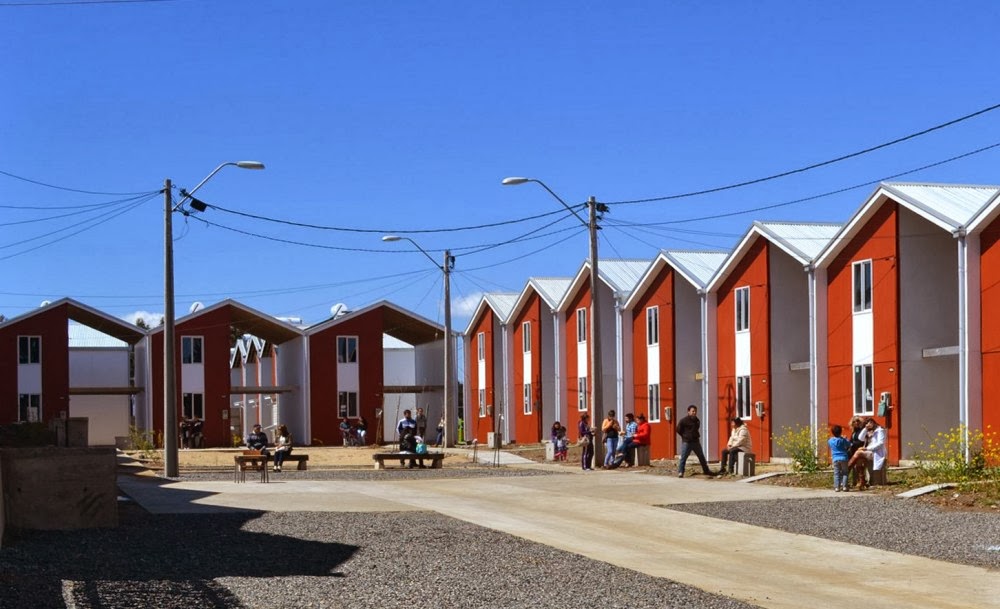
villa verde - constitución

[what]: housing

[where]: constitución, maule, chile

[who]: elemental

[when]: 2010

"[...] but we thought of once again applying the principle of incremental construction and prioritization of the more complex components, this time with higher standards both for the initial and the final scenario."


[source]: archdailyelmental

sábado, 30 de noviembre de 2013

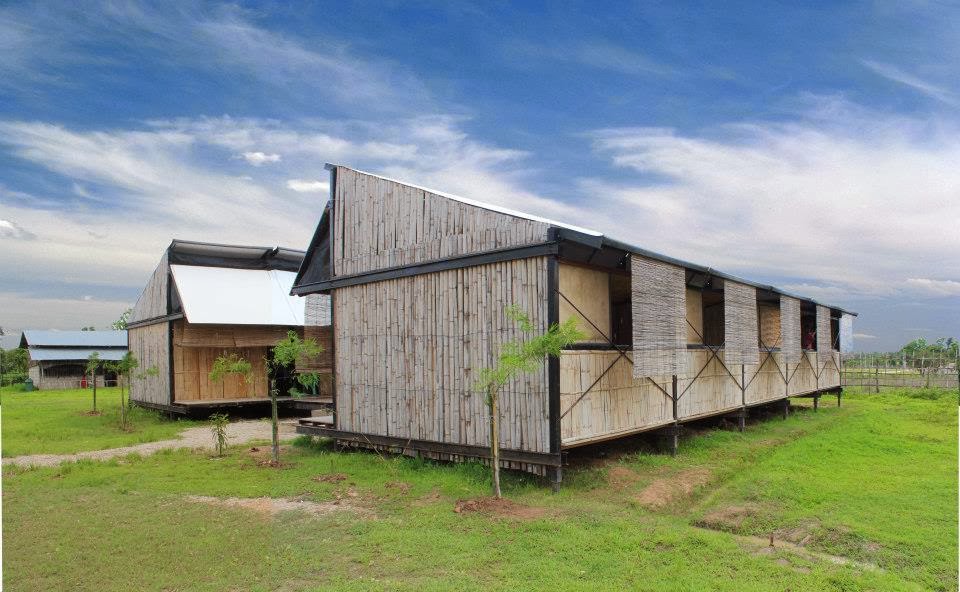
moving schools - mae sot

[what]: primary school

[where]: mae sot, tak, thailand 

[who]: building trust international 

[when]: 2012

Located in a small town in the border between Thailandia and Burma, where many burmese refugees are staying. The architects thought about designing a school that could be someday moved near Burma, to regenerate the small rural areas devastated by the civil war. 


domingo, 17 de noviembre de 2013

school el corporito - temascaltepec

[what]: elementary school

[where]: el corporito community, temascaltepec, mexico 

[who]: antonio peña, juan garay, alexis ávila

[when]: 2007

"The project arises from a CONAFE program, called "schools for equity", in which and architecture school collaborates with this NGO to design and built an elementary school in a marginalized community. The materials used are the traditional ones, but with contemporary building techniques." 


[source]: archdaily

sábado, 26 de octubre de 2013

women's opportunity center - kayonza

[what]: cultural center

[where]: kayonza, rwuanda, africa

[who]: sharon davis design

[when]: 2013

"We chose the idea of a vernacular Rwandan village as our organizing principle: a series of human-scaled pavilions clustered to create security and community for up to 300 women. 
(...)
Bricks were made on site by the center's future users; in crafting the clay bricks needed for construction, women are learning marketable, income-generating skills."


sábado, 21 de septiembre de 2013

clean water - global design forum

[what]: a water-filtration system that uses plants to extract arsenic from water supplies and allows the user to sell the poisonous substance at a profit

[where]: presented at the Global Design Forum, London. it has been tested in Bangladesh. 

[who]: stephen goodwin honan

[when]: 2013

simple and much more than useful. it costs about $10, and it can produce $85 of arsenic, which can easily be sold by the families producing it [at the same time they get clean water]. Now, if we think that the average income of this families in Bangladesh is $1 a day... 


[source]: dezeen

viernes, 23 de agosto de 2013

football for hope - kimisagara

[what]: football for hope center

[where]: kimisagara, rwanda

[who]: killian doherty + architecture for humanity

[when]: 2009

What is what really matters in architecture? someday I would like to be remembered for having done architecture like this.

[source]: archdaily